What Types of Capsule Machines Are Available?
Choosing a Capsule Machine starts with a practical question: what needs to happen to each capsule? Production volume, capsule format, available floor space, and operator experience all shape the answer. A small laboratory may need a compact manual filler. A growing plant may benefit from a semi-automatic system. High-volume production often calls for an automatic machine with controlled dosing and repeatable output.
Capsule equipment also serves different stages of the process. Filling machines place measured material into capsule shells, while polishing and inspection equipment help remove surface dust and identify visible defects. Some lines include counting or conveying systems. Those additions can save handling time, but they also require space, maintenance, and careful setup. More automation is not always better. Sometimes it adds complexity before a team is ready.
The expert quotation below is an editorially composed line, not a verified statement from a named industry professional: “Choose the machine around the process you can consistently control, not the output you merely hope to reach.” That distinction matters when comparing manual, semi-automatic, and fully automatic models. This overview explains what each type does, where it fits, and which trade-offs deserve a closer look. The categories are useful, though real product ranges can overlap. A machine’s label alone rarely tells the whole story.
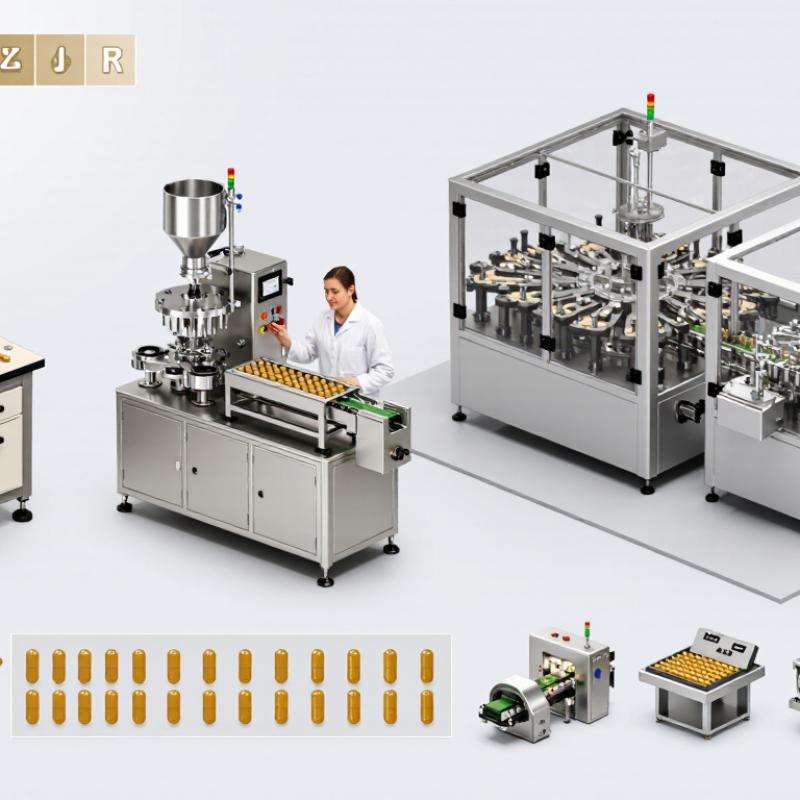
Capsule Machines Classified by Their Main Function
Capsule machines are best understood by the job they perform, rather than by size alone. Filling machines place measured powder, pellets, or other suitable materials into empty capsule shells. Manual and semi-automatic models suit small batches and hands-on work. Automatic models can handle larger production runs, but they still need careful setup and routine checks. A slight change in fill weight may affect consistency.
Some machines focus on capsule handling after filling. Closing or locking equipment joins the capsule body and cap, while banding or sealing machines apply an added seal where the process requires one. Capsule polishers remove loose powder from the outer surface. Inspection and sorting machines help identify visible defects, incorrect orientation, or inconsistent capsules. That matters. Their checks support quality control, but they do not replace a validated inspection process.
In a real production room, these functions may sit in one line or operate as separate stations. The categories can overlap, which makes equipment descriptions a little untidy. A practical selection starts with the material, batch size, target output, and cleaning requirements. Operators should also check whether parts can be removed easily and whether settings remain stable across a run. A fast machine is not automatically the better fit.
What Types of Capsule Machines Are Available?
Capsule machines are classified by their main function. This chart compares representative hourly output ranges for manual, semi-automatic, and automatic capsule fillers.
Output varies by machine design, capsule size, material, and operating conditions. Sorting, polishing, sealing, and inspection machines perform separate downstream functions and are not measured by filling output.
Manual Capsule Machines for Small-Batch Production
What Types of Capsule Machines Are Available?
Manual Capsule Machines for Small-Batch Production
Manual capsule machines suit small runs, formulation trials, and settings where operators need close control. A tabletop unit typically holds capsule bodies in a plate; the operator separates caps, spreads powder with a scraper, and closes each capsule by hand. Some models include a tamping tool for denser fills. Output depends on plate capacity, powder flow, and operator technique, so treat advertised capacity as a guide, not a guarantee.
Consistency still needs measurement. USP General Chapter <905>, Uniformity of Dosage Units, uses an initial sample of 10 units and an acceptance-value limit of 15.0. That standard does not certify a machine; it highlights why operators should weigh samples and document setup, fill mass, and rejected units. A small batch can expose problems quickly. It can also produce uneven fills if powder clumps or the tamping pressure changes between passes. That is useful, but sometimes frustrating.
Tips: Keep the plate level, sieve or de-lump powder when appropriate, and use the same tamping routine for each batch. Record capsule size, powder mass, and sample weights. Manual work is slower, but the hands-on process makes adjustments easy to see.
What Types of Capsule Machines Are Available? — Manual Capsule Machines for Small-Batch Production
Note: Batch capacities are indicative, not standardized. Confirm the machine’s stated capacity and capsule-size compatibility before purchase. Manual fillers are generally designed for two-piece hard capsules; performance also depends on powder characteristics and operator technique.
Semi-Automatic Capsule Machines for Controlled Output
Semi-automatic capsule machines suit teams that need steady production without handing every step to an automated line. An operator typically places empty capsule bodies into a tray, fills them with powder or suitable granules, and closes the shells using the machine’s pressing mechanism. The operator remains part of the process. That matters.
Output depends on capsule size, material flow, and how consistently the machine is loaded. A powder that clumps may leave uneven fills, while a free-flowing blend can behave differently from one batch to the next. Check fill weights at regular intervals, and record adjustments such as dosing depth or tamping pressure. These checks help identify drift before it affects a large run.
Semi-automatic equipment can offer a practical balance: more repeatable filling than hand work alone, with less setup than a fully automated system. It also requires attention. The operator must keep trays aligned, watch for damaged shells, and clean product-contact parts between runs according to the machine’s instructions. Changeovers can take longer than expected. That is an easy detail to underestimate, especially when several capsule sizes are in use. A small production log can help teams compare output and spot recurring issues.
Automatic Capsule Machines for Continuous Manufacturing
Automatic capsule machines suit continuous manufacturing when dosing, closing, inspection, and discharge operate as one synchronized line. A typical system feeds empty capsules from a hopper, meters powder or granules into each body, then checks closure and fill weight. Operators can monitor speed, stoppages, and weight variation on the control panel. Small details matter.
Grand View Research valued the global capsule-filling-machine market at about US$1.1 billion in 2023 and projected 6.6% annual growth from 2024 to 2030. These figures describe the wider equipment market, not continuous lines alone. Still, they show sustained investment in capsule-filling capacity. In practice, continuous operation is less tidy than it sounds: powder flow can change, and a single jam may interrupt the line. ICH Q13, adopted in 2023, provides a regulatory framework for developing and managing continuous manufacturing processes. That makes process monitoring and clear records essential, not optional.
Tips: Check fill-weight trends during the run, not only at startup. Watch powder flow and capsule alignment after any stoppage. Set a realistic cleaning and inspection routine; maximum speed is not always the best setting.