China Top Robotic Coffee Barista Manufacturers

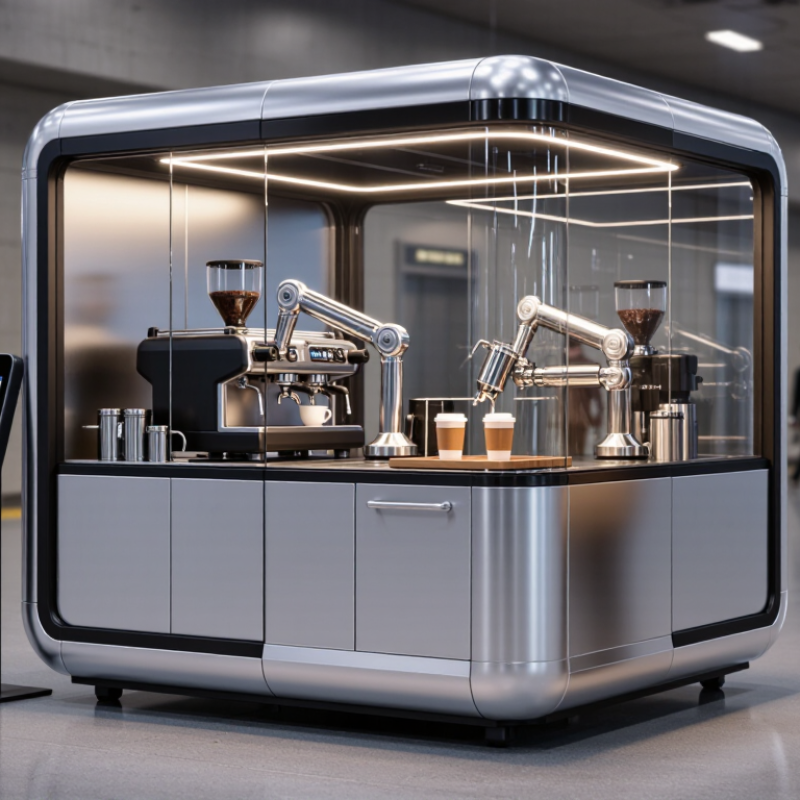
China’s robotic coffee barista market is moving beyond showroom novelty. Its machines now appear in office lobbies, transport hubs, malls, and compact kiosks. A customer watches a cup slide beneath a steel spout while robotic arms dose, tamp, brew, and add milk. The scene looks effortless. Reliable performance is harder.

This guide examines leading Chinese robotic coffee barista manufacturers through practical measures: drink consistency, menu flexibility, cleaning access, service response, payment integration, and installation requirements. Henry Hu, founder of Cafe X, has described the broader promise of coffee automation as making quality coffee more accessible. That idea is useful, but access alone is not enough. Buyers need clear data on hourly output, uptime, ingredient waste, and maintenance intervals. Ask for real operating references, not only polished demonstrations. Check how the machine handles peak queues, recipe changes, and an empty milk container. Small failures count. A stalled rinse cycle can quickly disrupt service.

China’s suppliers differ in robotics design, software support, customization, and export experience. Some build complete kiosks; others focus on the robotic arm or coffee system. The best fit depends on location, expected demand, and local service coverage. A low purchase price may hide costly downtime. There is no universal winner. This comparison offers a grounded starting point, while recognizing that manufacturer claims still need independent verification.
China Top Robotic Coffee Barista Manufacturers

What Defines a Robotic Coffee Barista System

China Top Robotic Coffee Barista Manufacturers
What Defines a Robotic Coffee Barista System

A robotic coffee barista system is more than an arm that moves a cup. It combines ingredient storage, grinding, brewing, drink assembly, and order controls into one coordinated workflow. Sensors and software help manage steps such as bean dosing, water temperature, and milk dispensing. Details matter. A few grams of coffee or several degrees of temperature can change the taste.

In practice, reliable systems make each action repeatable while keeping the process visible to staff. A clear interface should show order status, cleaning reminders, and faults that need attention. Behind the counter, removable parts and accessible surfaces make daily cleaning less awkward. They also support consistent hygiene routines. A robot cannot judge every bean or solve every equipment problem. Operators still need to check extraction, refill supplies, and respond to unusual orders. Not quite effortless. When comparing systems, look beyond speed: evaluate cup consistency, recovery after errors, maintenance access, and how well the machine fits the café’s actual menu. Even a polished demonstration may hide small workflow frustrations that appear during a busy morning.

What Defines a Robotic Coffee Barista System?

Consistent extraction is one measure of a robotic coffee barista system’s performance. A commonly cited espresso preparation target is 20–30 seconds; the ideal time varies with the coffee, dose, grind, and recipe. Automation helps control repeatable steps such as dosing, tamping, and extraction.

Core Technologies Used in Robotic Coffee Preparation

Robotic coffee preparation depends on several technologies working together. A grinder with adjustable settings controls particle size, while a load cell measures each dose by weight. Small differences matter: a few extra grams can change a shot’s strength. Temperature sensors monitor the boiler and brewing water. Consistent heat helps, but it cannot rescue stale beans or an uneven grind.

Machine vision can check cup position, identify fill levels, and detect spills around the serving area. Robotic arms then move cups and guide brewing components through repeatable steps. Pressure and flow sensors track extraction as water passes through the coffee bed. When readings drift, software can flag a likely issue. Still, sensors need calibration, and a tidy screen does not guarantee a good cup. That part deserves more attention.

Tips: Keep a simple log of dose, grind setting, brew time, and temperature. Clean grinder chutes and milk-contact parts on schedule. Test drinks at different times of day; humidity and bean age can shift results. Automation reduces variation, but staff observation remains useful. Sometimes, the machine misses a small clue.

China’s Robotic Coffee Barista Manufacturing Landscape

China’s robotic coffee barista manufacturing landscape brings together mechanical engineering, automation, beverage equipment, and software. Suppliers may produce robotic arms, cup-handling modules, grinders, milk systems, or complete kiosks. The degree of in-house manufacturing varies, so buyers should ask which components are made locally and which come from external partners.

Production quality depends on more than a polished demonstration. A useful factory review checks food-contact materials, cleaning access, electrical safety documentation, and the consistency of repeated drink preparation. Test the machine with different cup sizes and recipes. Watch how it handles a low bean supply, a blocked outlet, or a misplaced cup. Small faults can disrupt a busy service period.

Details matter. China’s supplier base can support customization, from compact counters for offices to higher-throughput units for transport hubs. Yet customization may increase maintenance needs and make spare parts harder to standardize. Ask for cycle-time records, cleaning instructions, warranty terms, and service response expectations. Request a supervised trial using the intended menu and local ingredients. A robot can repeat motions precisely, but taste still depends on calibration, fresh ingredients, and regular human oversight. Not every setup works.

How Manufacturers Design, Produce, and Support Their Systems

A robotic coffee barista begins as a workflow problem, not just a robot arm. Manufacturers map each drink from order entry to cup handoff, then choose equipment around that sequence. The design may combine a grinder, espresso machine, milk system, sensors, and a refrigerated ingredient cabinet. Each part needs room for cleaning and refilling. Small details matter.

Production quality depends on repeatable assembly and careful testing. Technicians can check dosing accuracy, water temperature, cup placement, and emergency stops across multiple operating cycles. They should also test less tidy conditions, such as a slightly misplaced cup or a nearly empty milk container. Real cafés are not controlled showrooms. A demo may look smooth while peak-hour service exposes slow recovery or awkward cleaning. That gap deserves attention.

Support continues after installation. Manufacturers may help plan site measurements, train local operators, and provide maintenance schedules with clear inspection points. Remote diagnostics can flag errors, but staff still need simple instructions for jams and routine cleaning. Spare-part access matters, too; a small sensor can stop an entire station. No system is maintenance-free. Buyers should ask how quickly support responds, which parts are stocked locally, and how software updates are tested before deployment. Teams sometimes overlook staff feedback during early trials, and that is a weakness worth correcting.

China Top Robotic Coffee Barista Manufacturers - How Manufacturers Design, Produce, and Support Their Systems

Stage What Manufacturers Do Typical System Considerations Quality or Performance Checks Information Buyers Can Request
Requirements and site planning Define the intended menu, service hours, customer flow, installation location, and level of staff involvement before specifying the machine. Available floor space, access for maintenance, power supply, water and drainage arrangements, ingredient storage, and local operating conditions. Confirm that the proposed layout and utility requirements match the installation site and applicable local requirements. Dimensioned drawings, utility requirements, installation checklist, and a clear list of assumptions and exclusions.
Product and workflow design Coordinate the robot arm, coffee equipment, cup handling, payment interface, and user interface as one operating workflow. Reach and motion limits, collision avoidance, cup positioning, order sequencing, cleaning access, and safe separation between moving parts and customers. Review workflow demonstrations, safety documentation, and how the system handles interrupted or incorrectly placed orders. Workflow diagrams, interface descriptions, risk assessment information, and details of the supported drink options.
Coffee and ingredient integration Integrate brewing, grinding, milk handling where applicable, dispensing, and ingredient replenishment with the automated sequence. Recipe settings, ingredient compatibility, temperature control, storage conditions, and whether milk or other perishable ingredients require refrigeration. Check repeatability of recipes, dispensing accuracy, ingredient traceability, and cleaning procedures for product-contact parts. Recipe configuration options, food-contact material information, cleaning instructions, and ingredient handling requirements.
Manufacturing and assembly Build and assemble mechanical, electrical, and control-system components, then integrate them into the final unit. Component fit, wiring and connections, enclosure design, access to serviceable parts, and consistency between units. Ask about incoming inspection, assembly checks, electrical safety testing, and final functional testing before shipment. Quality-control process, inspection records available for the unit, product documentation, and applicable conformity documents.
Software and system testing Configure the control software, operator tools, ordering interfaces, and any supported monitoring or reporting functions. Network connectivity, user permissions, fault notifications, software update process, and behavior during connection or power interruptions. Test normal orders, common fault conditions, recovery steps, and the operation of safety-related stops and alerts. Software feature list, update policy, connectivity requirements, data-handling information, and troubleshooting guidance.
Packaging and delivery Prepare the equipment for transport and provide the handling and installation information needed at the destination. Shipping dimensions and weight, lifting points, packaging protection, customs documentation where relevant, and delivery access. Verify the shipment contents against the packing list and inspect for transport damage before installation. Packing list, handling instructions, installation sequence, warranty terms, and spare-parts list.
Installation and commissioning Install the unit, connect required utilities, configure operating parameters, and verify that the complete workflow works on site. Site readiness, calibration, payment or ordering integration, staff training, and acceptance criteria agreed before handover. Run test orders, confirm safety functions, check cleaning access, and record any outstanding commissioning tasks. Commissioning checklist, training materials, acceptance record, and contact details for technical support.
After-sales service and upkeep Provide technical assistance, maintenance guidance, replacement parts, and software support according to the service arrangement. Preventive maintenance intervals, cleaning frequency, consumables, expected service coverage, and availability of trained technicians. Clarify response channels, escalation steps, warranty coverage, and which maintenance tasks are performed by the operator. Service-level terms, maintenance schedule, warranty exclusions, spare-parts lead times, and operator training plan.

Buyer note: Capabilities, specifications, certifications, and service commitments vary by system and supplier. Confirm all requirements and performance claims in the product documentation and purchase agreement.

Key Factors for Comparing Chinese Robotic Coffee Barista Manufacturers

China Top Robotic Coffee Barista Manufacturers

Key Factors for Comparing Chinese Robotic Coffee Barista Manufacturers

Compare manufacturers by more than cup speed. Check extraction consistency, milk-texture control, cleaning steps, uptime, spare-part access, and software support. Ask for logged results across a full working shift, not just a polished demonstration. The International Federation of Robotics’ World Robotics 2024 report recorded nearly 205,000 professional service robots sold worldwide in 2023, up 30% year over year. This signals wider adoption, but does not prove coffee-specific performance. Request drink-level test data.

For Chinese suppliers, compare factory quality controls, export documentation, installation training, and response times in your target market. Inspect food-contact materials and ask how the machine prevents residue around milk lines and grinder chutes. Review warranty exclusions and the price and lead time of key parts, such as pumps, valves, and burrs. Test whether recipes can be adjusted without specialist coding. A quiet showroom is not a café rush. Published robot-sector figures rarely isolate robotic coffee bars, so supplier claims need independent trials and clear measurement methods.