
China Top 10 Electric Mini Truck Manufacturers
China’s electric mini-truck market is shaped by dense city streets, short delivery routes, and growing demand for quieter, lower-emission transport. For fleet buyers, the badge is only part of the decision. Payload, real-world range, charging time, service coverage, and battery warranty can matter more than a polished brochure. A truck carrying produce before dawn faces different demands from one moving parcels between warehouses.
This guide to China’s top 10 Electric Mini Trucks manufacturers introduces companies competing across light-duty commercial vehicles. It considers product range, manufacturing experience, battery and vehicle integration, export activity, and after-sales support. BYD chairman Wang Chuanfu has described vehicle electrification as “an irreversible trend.” That perspective helps explain the market’s direction, but it does not mean every electric model suits every fleet. Details matter.
Rankings can shift as new models launch and company data changes. Some manufacturers publish more specifications than others, so comparisons may not be perfectly even. Buyers should check current payload ratings, usable battery capacity, local service access, and operating costs against their own routes. A low purchase price can look attractive, yet downtime or limited charging access may alter the calculation. This overview is a starting point, not a substitute for a vehicle inspection or a route-specific assessment. The practical choice is often less obvious than the headline list suggests.
What Defines an Electric Mini Truck in China?
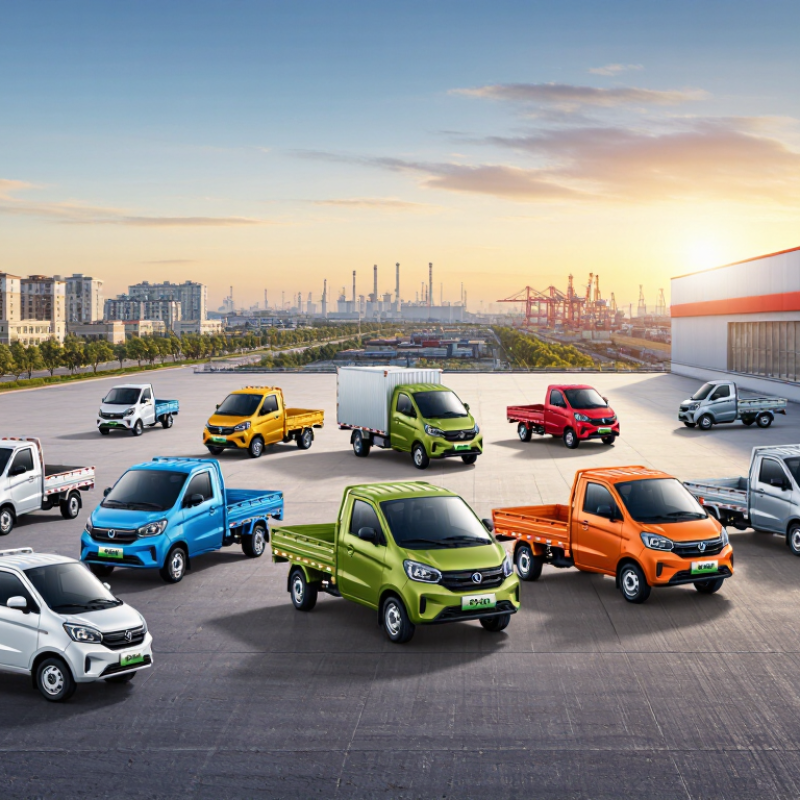
In China, an electric mini truck is generally a compact, battery-powered work vehicle built for local delivery and light-duty transport. The category is not perfectly tidy. Cab-over designs, short wheelbases, and narrow bodies are common, but names and dimensions can vary between manufacturers. What matters is the usable load area, rated payload, and whether the truck can navigate tight lanes or crowded loading bays.
Its electric drivetrain replaces an engine with a motor, battery pack, and charging system. Buyers should compare payload with the truck’s own weight, not just bed size. A larger battery may extend operating range, but it can also reduce available carrying capacity. Real-world distance depends on load, stop frequency, road slope, temperature, and driving style. Numbers need context. A delivery route with frequent stops may use energy differently from a steady suburban run.
A careful assessment also checks braking, steering, tire capacity, visibility, and charging access at the depot. Battery placement can affect cargo space and handling, so specifications deserve close reading. I would want to see the truck loaded and tested on its intended route. A compact vehicle is still a working vehicle. Registration categories and permitted uses can differ by location, so confirm the details before purchase. Some product claims look precise, yet leave out the conditions behind them.
How China’s Electric Mini Truck Industry Has Developed
China’s electric mini-truck industry has developed around a clear daily need: moving goods through crowded streets and short delivery routes. Smaller vehicles can suit neighborhood distribution, where frequent stops and limited parking matter. Battery costs, vehicle range, payload, and charging access have shaped product development. There is no single winning formula. A truck that works well on a mild-weather city route may lose useful range in winter or under a heavy load.
The wider market is expanding. The International Energy Agency reported nearly 54,000 electric truck sales worldwide in 2023, about 35% more than in 2022. This figure covers truck classes broadly, not mini-trucks alone, so it offers context rather than a direct measure of this segment. China’s National Energy Administration counted 8.596 million charging facilities nationwide at the end of 2023. That larger network helps, but public chargers do not always match delivery schedules or depot locations. Practical progress depends on details: reliable overnight charging, durable cargo areas, and enough range after repeated stops. A real shift. Yet fleet operators still need to compare total operating costs with care; purchase price alone can mislead. I would not call the transition complete.
China Top 10 Electric Mini Truck Manufacturers - How China’s Electric Mini Truck Industry Has Developed
Industry-development snapshot, not a manufacturer ranking. National NEV figures below cover all new energy vehicles and are not specific to electric mini trucks.
| # | Development dimension | Verified data or milestone | Relevance to electric mini trucks | Reference |
|---|---|---|---|---|
| 1 | Early public-vehicle pilots | China launched the “Ten Cities, Thousand Vehicles” energy-saving and new-energy vehicle pilot program in 2009. | The pilot helped establish early vehicle deployment and operating experience; it was not limited to mini trucks. | Ministry of Finance and partner ministries |
| 2 | Purchase incentives | National purchase subsidies for eligible NEVs were phased out after December 31, 2022. | Incentives supported the broader NEV market during its growth phase; eligibility depended on the relevant policy and vehicle specifications. | Ministry of Finance, Ministry of Industry and Information Technology, and partner agencies |
| 3 | Long-term industry plan | The 2021–2035 New Energy Vehicle Industry Development Plan set a target for NEVs to reach about 20% of new vehicle sales by 2025. | The plan provided a long-term policy framework for electrification across vehicle categories, including commercial vehicles. | State Council, 2020 |
| 4 | Electric-vehicle safety requirements | China’s GB 18384-2020 electric-vehicle safety standard took effect on January 1, 2021. | Vehicle safety requirements are relevant to electric trucks as well as other electric vehicles. | Standardization Administration of China |
| 5 | NEV sales baseline | In 2022, China recorded 6.887 million NEV sales, equal to 25.6% of total new-vehicle sales. | This national figure indicates the scale of the wider electrified-vehicle market, not mini-truck sales. | China Association of Automobile Manufacturers (CAAM) |
| 6 | Continued market expansion | In 2023, China recorded 9.495 million NEV sales, equal to 31.6% of total new-vehicle sales. | A growing NEV ecosystem can support wider availability of components, charging options, and service capabilities. | CAAM |
| 7 | Market scale in 2024 | In 2024, China recorded 12.866 million NEV sales, equal to 40.9% of total new-vehicle sales. | This is an all-category national statistic and should not be read as the electric mini-truck market share. | CAAM |
| 8 | Charging infrastructure | At the end of 2024, China had 12.818 million charging facilities, including 3.585 million public charging facilities. | Charging access matters to fleet planning; actual suitability depends on route, vehicle energy use, charging time, and depot access. | National Energy Administration (NEA) |
| 9 | Vehicle-category comparison | “Mini truck” is a market description, not a single globally uniform vehicle class. | Compare gross vehicle weight, rated payload, dimensions, range, and applicable vehicle classification rather than relying on the label alone. | Vehicle specifications and applicable national classification rules |
| 10 | Commercial operating use | Electric light trucks are used in commercial applications such as urban goods delivery and fleet operations. | The practical choice depends on payload, daily distance, stop frequency, charging arrangements, and local operating requirements. | Application varies by operator and vehicle configuration |
Note: NEV means new energy vehicle. CAAM sales and NEA charging figures are nationwide totals across vehicle categories, not electric mini-truck-only data.
Key Vehicle Types, Technologies, and Manufacturing Standards
China’s top ten electric mini truck manufacturers may offer very different vehicle types. Common options include compact cargo beds, enclosed delivery vans, refrigerated bodies, and light-duty dump trucks. Match the body to the route and payload, not just the advertised range. A narrow urban lane calls for a different wheelbase than a depot route with frequent loading.
Battery management systems monitor cell temperature and charge balance. Regenerative braking can recover energy in stop-and-go traffic, while thermal controls help protect battery performance. Ask how the vehicle performs with a full load, air conditioning, and repeated short trips. Details matter. Manufacturing quality also deserves close review: inspect weld consistency, wiring protection, brake testing, and production traceability. Certification claims should be checked against the exact model and factory.
Tips: Request a sample inspection report and a clear list of included components. Compare rated payload, usable battery capacity, charging time, and warranty terms. Check paperwork carefully.
A polished specification sheet is not proof of dependable service. Ask about parts availability, technician training, and how faults are diagnosed. For export purchases, confirm that the vehicle configuration and safety documentation suit the destination market. Some listings leave details vague; that is worth questioning, even when the price looks attractive.
Top 10 Electric Mini Truck Manufacturers in China
China’s top 10 electric mini truck manufacturers are best compared by usable payload, driving range under load, charging time, and after-sales coverage. The International Energy Agency’s Global EV Outlook 2024 reports nearly 54,000 electric truck sales worldwide in 2023, with China accounting for more than 70%. These figures cover trucks broadly, not mini trucks alone, but they show how quickly electric freight is developing.
For urban delivery, compare rated payload with the weight of real cargo, not just an empty-vehicle range claim. A loaded truck climbing a ramp or stopping repeatedly may travel less than the brochure suggests. Check battery capacity, warranty terms, charging compatibility, and parts availability in the delivery area. Small details matter. A low purchase price can lose its appeal when service is far away. Manufacturer comparisons also have gaps: published test conditions are not always consistent, so rankings should be treated as a starting point.
Tips: Ask for a loaded-route demonstration. Record distance, cargo weight, and charging time, then compare results across vehicles. And keep a little doubt. That is useful.
How to Compare Manufacturers, Models, and Market Capabilities
Comparing China’s electric mini-truck manufacturers takes more than matching advertised range and price. Start with the work cycle: a 300-kilogram parcel route with frequent stops differs sharply from a 1.5-tonne building-supply run. Check rated payload after body fit-out, usable battery capacity, charging time, gradeability, turning radius, and loaded range. Small details matter. Ask for test conditions, not just a showroom figure.
The International Energy Agency’s Global EV Outlook 2024 reports about 54,000 electric truck sales worldwide in 2023, up 35% year on year; China accounted for roughly 70%. This covers a broad truck category, not mini trucks alone, so treat it as market context rather than a direct demand forecast.
Compare manufacturers on battery warranty, parts availability, technician coverage, uptime records, and export configuration options. A low purchase price can hide long service waits. A useful warning. Request fleet references from similar routes, then compare total cost per delivered tonne-kilometre.
I would still verify claimed range independently; cold weather, payload, and frequent stops can reduce it.