What Are the Top Types of Coffee Beans?
Coffee beans are seeds from different Coffea species, and their names hint at flavor, growing conditions, and market role. Arabica and Robusta dominate global supply, while Liberica and Excelsa remain less common and less familiar to many drinkers. USDA Foreign Agricultural Service’s December 2024 Coffee: World Markets and Trade projected 174.9 million 60-kilogram bags of production worldwide for the 2024/25 season, including 97.8 million bags of Arabica and 77.1 million of Robusta. The figures show why these two types shape most conversations about coffee.
But production totals do not tell you what a cup will taste like. Arabica is often associated with aromatic, nuanced flavors, while Robusta is commonly linked to stronger bitterness and more caffeine. Those are tendencies, not guarantees. Origin, altitude, processing, storage, and roasting can all change the result. A bright Arabica from one farm may taste very different from another. That distinction matters.
This guide compares the top types of coffee beans by their traits, typical flavors, and practical uses. It also looks beyond the familiar pair to Liberica and Excelsa, whose distinctive profiles deserve a closer look. The categories are useful, but not perfectly tidy: Excelsa is often treated as a Liberica variety rather than a separate species. Labels can oversimplify. Use them as a starting point, then let the cup—and reliable sourcing information—shape your expectations.
What Makes One Coffee Bean Type Different from Another?
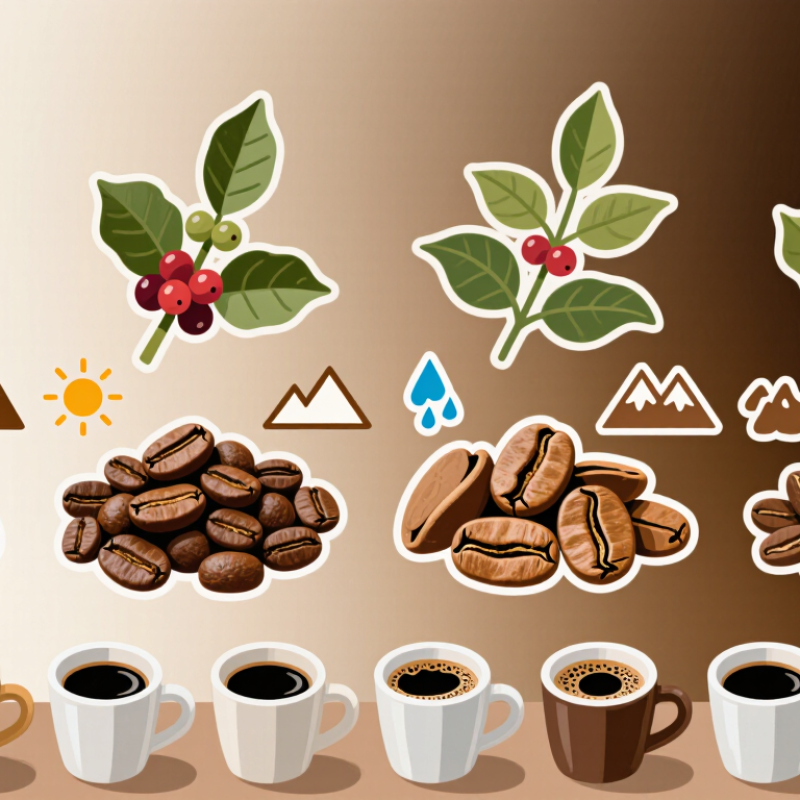
What makes one coffee bean type different from another? Genetics set the starting point, but growing conditions and processing shape what ends up in the cup. Arabica often tastes more aromatic and nuanced, while Robusta tends to bring stronger bitterness, heavier body, and more caffeine. These are tendencies, not guarantees. A carefully processed Robusta can surprise you.
The International Coffee Organization’s Coffee Report and Outlook tracks Arabica and Robusta as separate production groups; its 2023 report estimated Arabica at about 57% of world output in the 2022/23 crop year. That scale matters: these two species dominate trade, though less common types such as Liberica also exist. Bean density and flavor can shift with altitude, rainfall, soil, and harvest maturity. Small details matter. A green, underripe cherry may leave a cup tasting sharply grassy.
Processing adds another layer. Washed coffees are often cleaner and brighter, while natural processing can bring fruit-like notes, though results vary by farm and climate. The Specialty Coffee Association’s Coffee Value Assessment framework also treats sensory quality as more than a single score, encouraging structured descriptions of a coffee’s attributes. Roast level changes the impression again: darker roasting can mute delicate acidity and emphasize toasted flavors. I still find bean labels a little too neat. Species, origin, processing, and roast overlap, so tasting the same coffee brewed two ways can be more useful than trusting a label alone.
What Makes One Coffee Bean Type Different from Another?
Arabica and Robusta are the two most widely grown coffee species. Robusta beans typically contain more caffeine than Arabica beans. Values shown are approximate caffeine content by dry weight; actual levels vary by variety and growing conditions.
Arabica: The Most Widely Grown Coffee Species
Arabica is the leading coffee species by production, but “widely grown” does not mean it grows easily everywhere. The USDA Foreign Agricultural Service’s June 2024 Coffee: World Markets and Trade estimated about 96 million 60-kilogram bags of Arabica for 2023/24, out of roughly 169 million bags overall. That is close to 57 percent of world output.
Arabica plants thrive in cooler highland conditions, often on slopes where mornings bring mist and nights turn cool. They are more sensitive to heat and some diseases than Robusta plants, making growing conditions especially important. In the cup, Arabica is often associated with floral, fruity, or gently acidic notes. Taste varies. Roast level, processing, and freshness can shift those impressions significantly.
That reputation can become an oversimplification. Species alone is a weak flavor forecast; two Arabica coffees can taste strikingly different. A careful comparison considers origin, elevation, harvest, and processing, not just the species name. For a practical example, try smelling freshly ground beans before brewing, then note whether the brewed cup retains those aromas. The result may surprise you.
Robusta: A Stronger Bean with Higher Caffeine
Robusta comes from Coffea canephora, a species that generally contains more caffeine than Arabica. The exact amount varies by plant, growing conditions, and how the coffee is prepared. The cup feels different. Its beans often produce a bold, earthy taste, sometimes with notes of wood, nuts, or dark chocolate. Some drinkers enjoy that punch; others find the bitterness too sharp.
Caffeine depends on more than the bean type. A larger dose of grounds can matter more than a small difference between species, and brewing changes what ends up in the cup. Robusta is often used in espresso because it can add body and a thick layer of crema. Still, crema is not a reliable measure of caffeine. It looks impressive, but it does not tell the whole story.
Robusta plants can tolerate warmer conditions and some pests better than Arabica plants, which makes them valuable to growers. That resilience does not mean every Robusta coffee is cheap or low quality. Careful cultivation and processing can bring out sweetness and reduce harsh flavors. I would not describe it as simply “stronger” and leave it there. The word can mean more caffeine, a heavier taste, or both, and those are not always the same thing. Reading the roast and brewing details helps set better expectations.
What Are the Top Types of Coffee Beans? — Robusta: A Stronger Bean with Higher Caffeine
Figures and flavor descriptions are typical ranges, not guarantees; they vary with cultivar, growing conditions, processing, and roasting. Caffeine in a brewed serving also depends on the amount of coffee used and the preparation method.
Liberica and Excelsa: Less Common Coffee Species
Liberica and Excelsa offer a glimpse beyond the familiar Arabica–Robusta pairing. Liberica beans are often larger and less uniform, with a distinctive aroma that can suggest wood, flowers, or ripe fruit. Excelsa is commonly treated as a variety of Coffea liberica, though the separate name remains widely used in coffee trade and conversation. Its cups are often described as tart and fruit-forward, with a lingering, dark-fruit character. These are tendencies, not promises; processing and roasting can change the cup considerably.
They remain niche. The International Coffee Organization’s December 2023 Coffee Report and Outlook estimated 2023/24 production at about 178 million 60-kilogram bags. Its breakdown listed 102.2 million bags of Arabica and 74.4 million of Robusta, without comparable figures for Liberica or Excelsa. That gap reflects how limited their recorded commercial scale is, not their potential flavor value. A small lot can still be memorable.
For a practical tasting, compare a lightly roasted Liberica with an Excelsa brewed using the same grinder and water. Note the aroma before sipping, then check how acidity and sweetness change as the cup cools. Keep expectations flexible. A tasting note is a description, not a guarantee, and unfamiliar beans may need a few brewing adjustments before their character becomes clear.
How the Main Coffee Bean Types Compare in Flavor and Use
Arabica is commonly chosen for its layered flavor, which may include citrus, flowers, or a gentle sweetness. Its beans often produce a lighter, more aromatic cup, especially with a careful roast. Try it as a pour-over, where a paper filter can highlight crisp acidity and delicate aromas. Not always predictable. Growing conditions and processing can change the taste as much as the species.
Robusta tends to taste fuller and more bitter, with earthy or cocoa-like notes. It generally contains more caffeine than Arabica and often forms a dense, lasting crema in espresso. That makes it useful in blends designed for a strong, sturdy shot. The trade-off can be a harsher finish, though roast level and brewing technique matter. A dark roast may make its bitterness more noticeable.
Liberica has a less familiar profile, sometimes described as woody, fruity, or smoky. Its large beans and distinctive aroma can stand out in a single-origin brew, but the flavor may not suit every palate. Excelsa, often grouped with Liberica, can bring tart, fruit-like notes that add contrast to blends. These descriptions are guides, not guarantees; tasting a small cup is often more revealing than relying on a bean label.