
How to Choose Clear PVC Film for Your Business in 2026

Clear Pvc Film can protect products, improve shelf visibility, and support packaging or fabrication needs. But a clear sheet is not automatically the right sheet. Thickness, surface finish, flexibility, and temperature tolerance can affect how it performs on your production line.

The wider plastics context matters, too. The OECD’s Global Plastics Outlook (2022) estimates that global plastic production reached 460 million tonnes in 2019. That year, plastic waste totaled 353 million tonnes, and only 9% was ultimately recycled. These figures cover plastics broadly, not PVC film specifically. Still, they underline why buyers should consider material use, service life, and end-of-life options alongside price.

Small details matter.

For a business, selection should start with the actual job: a film for a display cover may need different properties from one used in a formed package. Check thickness and clarity against samples, then assess tear resistance, flexibility, processing conditions, and compatibility with inks or adhesives. Ask suppliers for current technical data sheets and test the film on your own equipment before committing to a large order. A specification can look complete and still miss a real production constraint. That deserves a second look. This guide explains how to compare Clear Pvc Film options in 2026, evaluate supplier claims, and make a practical choice without treating one grade as suitable for every application.
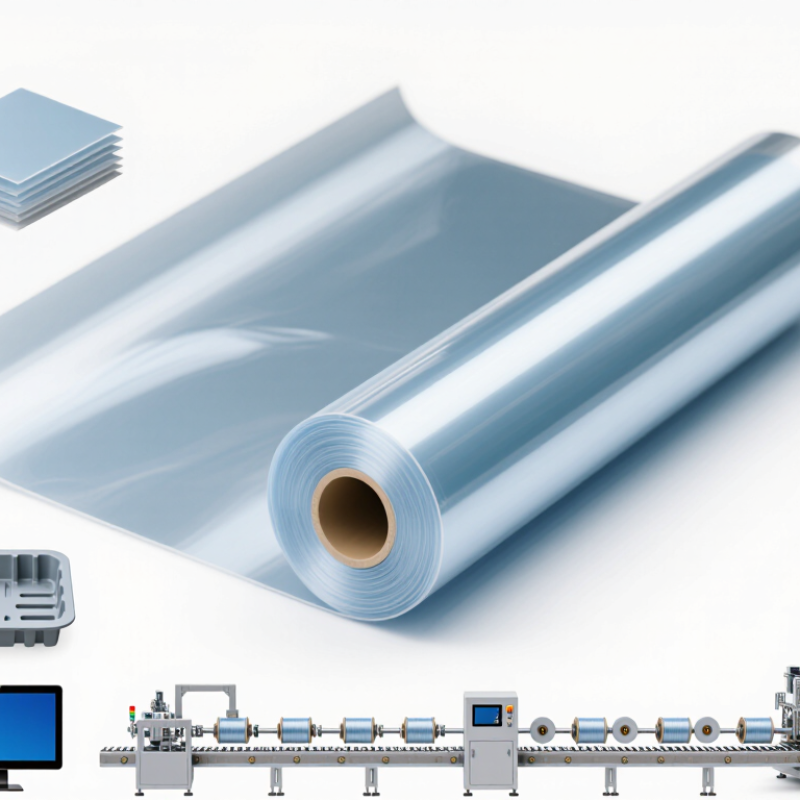
How to Choose Clear PVC Film for Your Business in 2026

Define Your Business Needs for Clear PVC Film

Before choosing clear PVC film, define the task it needs to perform in your business. Will it cover a display, form a flexible curtain, protect a work surface, or serve as packaging? Measure the finished area, including seams, hems, and extra material for handling. Measure twice. A film that looks suitable on a small sample may behave differently across a wide panel.

Consider how staff will use it each day. A frequently rolled divider needs flexibility and clean edges; a stationary cover may prioritize scratch resistance and flatness. Check thickness, roll width, clarity, and resistance to dust, moisture, or repeated wiping. Ask suppliers for technical data and a sample in the intended thickness. Test a small section. Hang it near a doorway, wipe it with your usual cloth, and inspect it under your normal lighting.

Temperature and exposure matter too. Note hot or cold work areas, sunlight through windows, and contact with oils or cleaning products. Confirm compatibility before ordering; “clear” alone says little about durability in a specific application. Roll storage is easy to overlook. A creased roll can waste time and material, even when the film itself is suitable. Your first specification may not be perfect. Record what falls short in a trial, then adjust the thickness or finish before ordering in volume.

Compare Film Grades, Formulations, and Additives

How to Choose Clear PVC Film for Your Business in 2026

Clear PVC film choices start with the job, not the sample’s shine. Packaging, protective covers, and flexible partitions face different demands. Compare film grades by thickness, clarity, flexibility, and resistance to handling. A thicker sheet may feel sturdier, but it can be harder to seal or form. Check the intended process before specifying a grade.

Formulation affects how film behaves over time. Plasticizers can influence softness and low-temperature flexibility, while stabilizers help limit heat-related changes during processing. UV additives may matter for film exposed to sunlight, but they can affect appearance and cost. Request technical data, including thickness tolerance and recommended processing conditions. Then test samples on your actual equipment. A crystal-clear sample can be persuasive; I would not select on appearance alone. Small details get missed.

Tips: Compare samples under the same lighting. Check for haze, odor, and surface marks. Test a folded edge and a sealed seam. Ask suppliers to explain additive options and provide consistent specifications. Keep a sample from each trial for later comparison.

Assess Clarity, Thickness, Strength, and Processing Needs

Clear PVC film should be assessed under the conditions your product will actually face. Check clarity in the intended lighting, not only against a white sample card. Reflections, haze, and slight distortion can make a film look different over a product or printed insert. A sample can look excellent on a desk and disappoint after forming; that is easy to overlook. Ask for consistent thickness data, then compare samples with a micrometer if small variations could affect fit or appearance.

Thickness alone does not determine strength. Consider the film’s exposure to pulling, sharp edges, repeated handling, and temperature changes. A thin film may suit a lightweight protective cover, while packaging that is stretched or handled often may need better tear resistance. Request relevant test data from the supplier, and confirm it matches your application. Test a small batch, too. Results can vary with the film formulation and production conditions.

Processing needs matter just as much. Check whether the film can be printed, die-cut, sealed, or thermoformed using your equipment. Heat may affect clarity or cause uneven shrinkage, so run a trial at normal production settings. Record the settings and inspect the finished part for wrinkles, cloudy areas, and weak seals. The first trial may not be perfect, and that is useful information. Adjust one variable at a time before committing to a larger order.

How to Choose Clear PVC Film for Your Business in 2026 - Assess Clarity, Thickness, Strength, and Processing Needs

Selection Factor Light-Duty Film General-Purpose Film Heavy-Duty Film What to Check Before Ordering
Typical thickness 0.10–0.20 mm (100–200 µm) 0.20–0.50 mm (200–500 µm) 0.50–1.00 mm (500–1,000 µm) Confirm nominal thickness and permitted tolerance. Measure samples at several points if thickness consistency is critical.
Clarity and appearance Suitable for lightweight covers and packaging where high optical quality is not essential. Often selected for clear curtains, document covers, and general protective panels. Can provide a sturdy viewing panel, but thickness, texture, and formulation may affect appearance. Request a sample and assess haze, distortion, surface marks, and color under the lighting used in service. Ask for haze or light-transmission data when optical performance has a specification.
Strength and flexibility Easy to handle and cut, but offers less resistance to puncture and repeated pulling than thicker film. Balances flexibility with greater handling durability for many indoor uses. Provides more material thickness for demanding handling, though it is heavier and may be harder to fold or form. Compare tensile strength, elongation at break, and tear or puncture performance using the same test method. Thickness alone does not determine durability.
Forming and handling Generally easier to trim, fold, and drape. Can suit cut-and-sew or fabricated products, depending on grade and equipment. May need more powerful handling or forming equipment and larger bend radii. Test the intended fold, bend, or fabrication method on production-equivalent samples, especially for repeated flexing.
Sealing and joining May be compatible with heat sealing or welding when the grade and equipment are suitable. Commonly evaluated for heat sealing, high-frequency welding, or mechanical joining. Joining settings may need adjustment for the greater material thickness. Confirm compatibility with the film formulation and validate seal strength, appearance, and cycle time on the actual machine. Do not assume one temperature or setting fits every grade.
Typical use considerations Light covers, sleeves, and packaging applications with modest wear. Protective screens, curtains, covers, and general-purpose fabricated items. More robust panels, barriers, or covers where additional thickness is useful. Match the grade to indoor or outdoor exposure, temperature range, cleaning chemicals, contact requirements, and expected service life.
Best fit when Low weight, flexibility, and economical material use are priorities. A practical balance of visibility, handling, and fabrication is needed. Greater thickness and a more substantial feel are required. Choose from verified specifications and trial samples rather than relying on a thickness label alone.

Specification note: These thickness bands are practical screening categories, not universal industry grades. PVC film properties vary with plasticizer, formulation, manufacturing process, and test conditions. For comparable mechanical data, request the test method and results—for example, tensile properties measured using ASTM D882—and confirm all critical requirements with the supplier before purchase.

Check Safety Standards, Certifications, and Supplier Reliability

Choosing clear PVC film begins with its intended use. A display cover, greenhouse panel, and food-contact application face different safety and performance requirements. Ask suppliers for test reports tied to the exact film grade and thickness, not a generic product sheet. For optical clarity, ASTM D1003 measures haze and luminous transmittance; ASTM D882 evaluates tensile properties. Check that reported results match your operating conditions, including temperature, cleaning agents, and sunlight exposure.

Certifications need careful reading. Confirm the issuing body, validity dates, product scope, and manufacturing site. A certificate for a supplier’s quality system does not certify every film it sells. ISO’s 2023 Survey recorded more than 1.26 million ISO 9001 certificates across 189 countries and economies. That scale makes verification more important, not less. Request batch-level certificates of analysis, traceability records, and documentation for any required food-contact or fire-performance claims. Keep the paperwork. It matters later.

Supplier reliability also shows up in small details: consistent roll width, clear labeling, and prompt answers about formulation changes. Ask for a sample roll and compare haze, thickness, and surface marks under your own lighting. I still find this easy to overlook: a flawless sample means little without repeatable production records. Review lead times, complaint handling, and change-control procedures before committing. A low quote can be tempting. Check the evidence first.

Test Samples and Compare Total Cost Before Purchasing

Before ordering clear PVC film, test samples under the conditions your business actually faces. Place a sheet near a window, under warehouse lighting, and against the materials it will cover. Check for haze, glare, scratches, and changes in flexibility after repeated handling. Small details matter. A film that looks clear on a supplier’s sample card may appear cloudy over dark products or bend poorly around tight corners.

Compare more than the price per roll. Include shipping, cutting waste, storage needs, installation time, and replacement frequency in your estimate. Ask for the film’s thickness and tolerance information, then check whether the sample matches the specification. A lower-cost option can become expensive if staff must trim extra material or replace damaged sections. Still, estimates are only estimates; a short trial may not reveal how the film performs after months of use.

Record sample results with photos and simple notes, such as “easy to wipe” or “glare near afternoon window.” Have the people who handle the film test it, too. Their feedback may differ from yours. I once assumed a stiffer sheet would be easier to install; it was not. Test a practical quantity before committing to a large purchase, and compare the full cost per usable area rather than the advertised roll price.