
What Is the Best White Nutcracker for 2026?
Choosing the best White Nutcracker for 2026 is about more than a clean, winter-white finish. The right piece should suit its setting, feel stable on display, and show details that remain attractive up close. Look carefully at the painted surface, the sharpness of the uniform’s trim, and the quality of the base. Small flaws can be hard to spot in product photos.
There is no perfect pick. A tall wooden figure may bring classic character, while a smaller resin design can fit neatly on a crowded mantel. Consider the listed height, materials, assembly needs, and care instructions before buying. If possible, check customer images for paint consistency and balance. A nutcracker that leans slightly may be charming to some, but distracting to others. That is worth thinking about.
This guide will compare practical features, display appeal, and overall value to help identify strong options for different homes and budgets. It will also distinguish decorative figures from designs with working levers, since appearance alone does not tell the whole story. For 2026, the best choice is not necessarily the most expensive or ornate. It is the one whose finish, construction, and scale match your space—and still feels right after the holiday decorations come down.
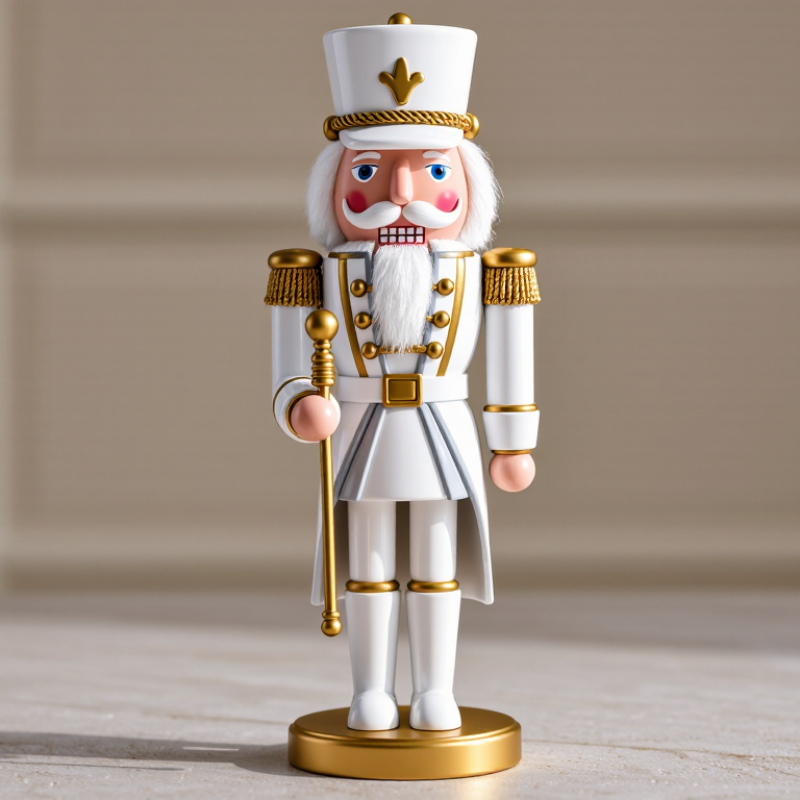
Define the White Nutcracker: Holiday Figurine or Functional Nutcracker?
A white nutcracker can be a holiday figurine or a tool designed to crack nuts. The pale finish describes its appearance, not its purpose. Decorative figures often have painted faces, fabric uniforms, and fixed or delicate jaws. They are made to stand on a mantel, not handle hard shells. That distinction matters.
A functional nutcracker needs a moving jaw and a sturdy lever or screw mechanism. Check that the handle feels secure and the opening fits the nuts you plan to crack. A smooth white coating can chip with repeated use, especially around joints and edges. Look closely at those areas. If the mechanism feels loose, choose another model; a festive appearance cannot make it reliable.
Some pieces combine both roles, but compromises are common. A finely detailed figure may be awkward to grip, while a practical tool may look less traditional. Decide whether you want a display piece or regular kitchen use before comparing designs. For a gift, the recipient’s habits matter more than the color. I would not assume a white nutcracker is functional just because its mouth opens. Check the construction and care instructions, too. A little less charming, perhaps, but much clearer.
What Is the Best White Nutcracker for 2026? — Define the White Nutcracker: Holiday Figurine or Functional Nutcracker?
| Type | What “White Nutcracker” Means | Can It Crack Nuts? | Typical Construction | Best Use | What to Check Before Buying | Best Fit |
|---|---|---|---|---|---|---|
| Decorative holiday figurine | A nutcracker-shaped soldier or character with a white finish, made primarily for seasonal display. | Usually no. A moving mouth or lever may be decorative and may not be designed to withstand cracking force. | Often painted wood, resin, or a combination of materials; construction and finish vary by item. | Mantels, shelves, entry tables, and holiday displays. | Check whether the seller describes it as decorative, its material, its stated height, and whether small or detachable parts are present. | Choose this if appearance and seasonal décor matter more than cracking nuts. |
| Lever-style functional nutcracker | A working nutcracker with a handle or lever, sometimes finished in white or paired with white accents. | Yes, if the product is specifically made and labeled for cracking nuts. | Commonly uses metal working parts; handle materials and finishes vary. The mechanism applies force to the shell. | Cracking suitable whole nuts for cooking or serving. | Look for a stated functional purpose, a stable grip, a suitable cracking cavity, and cleaning instructions. Follow the maker’s guidance for nut types. | Choose this when practical nut cracking is the priority. |
| Screw-style nutcracker | A functional device that uses a threaded screw to press against a nut; the exterior may be white or have a white finish. | Yes, when designed for food use and used according to its instructions. | Typically has a screw mechanism and a body or frame that holds the nut in place; materials vary by design. | Controlled, gradual cracking, especially when a user prefers turning a handle to squeezing pliers. | Check that the frame holds the nut securely, the screw moves smoothly, and the product specifies compatible nut sizes. | Choose this for controlled pressure and a deliberate cracking action. |
| Pliers-style nutcracker | A hand-operated cracking tool with two handles and jaws; white may refer to its finish or handle color. | Yes, if the jaws and mechanism are made for cracking nuts. | Usually has hinged handles and shaped jaws; materials and coatings vary. | Occasional kitchen use and cracking nuts that fit the jaws. | Check handle comfort, jaw shape, hinge stability, and any stated limits on nut size. Use controlled pressure to reduce shell scatter. | Choose this for a compact, straightforward hand tool. |
| White decorative figure with a separate tool | A white holiday figurine displayed alongside a separate, purpose-built nutcracker. | The separate tool can; the figurine generally should not be assumed to. | The figure is made for display; the companion tool has its own construction and operating mechanism. | Combining holiday décor with practical nut cracking. | Confirm which item is functional, keep food-contact tools separate from decorative finishes, and follow each item’s care instructions. | Choose this if you want both a white holiday display and a working kitchen tool. |
How to choose: “White nutcracker” can describe either a white holiday figurine or a functional kitchen tool. For décor, choose a figurine clearly sold for display. For cracking nuts, choose a tool explicitly labeled for that purpose; color alone does not indicate that an item is functional. Product materials, dimensions, and care requirements vary by design.