Best Modern Prefab Modular Homes Manufacturers in China?
Modern Prefab Modular Homes are attracting buyers who want predictable schedules, controlled factory production, and adaptable layouts. Yet “prefab” covers very different systems, from volumetric modules to panelized structures. Comparing manufacturers in China therefore requires more than looking at polished renderings or headline prices.
Industry research offers useful context, but projections need careful reading. McKinsey’s 2019 report, Modular construction: From projects to products, describes a modeled global opportunity of up to $1.6 trillion in annual value by 2030 if modular construction scales. This is not a guarantee for any buyer or supplier. It does, however, explain why manufacturers are investing in standardized production, digital design, and factory quality control. The report also highlights persistent barriers, including transport constraints and the need to coordinate design with manufacturing early.
Details matter.
This guide examines Chinese manufacturers through practical signals: documented factory capacity, material specifications, quality checks, project references, and clarity around installation support. It also considers whether a quoted price includes engineering, packing, shipping, foundations, and on-site assembly. These items can change the real budget substantially. Buyers should request current project evidence and verify claims directly; company brochures alone are not enough. No single manufacturer suits every climate, site, or approval process. Some comparisons will remain imperfect because public data is uneven, and that limitation deserves attention. The aim is to help readers shortlist suppliers with better questions, not to treat rankings as a substitute for independent technical review.
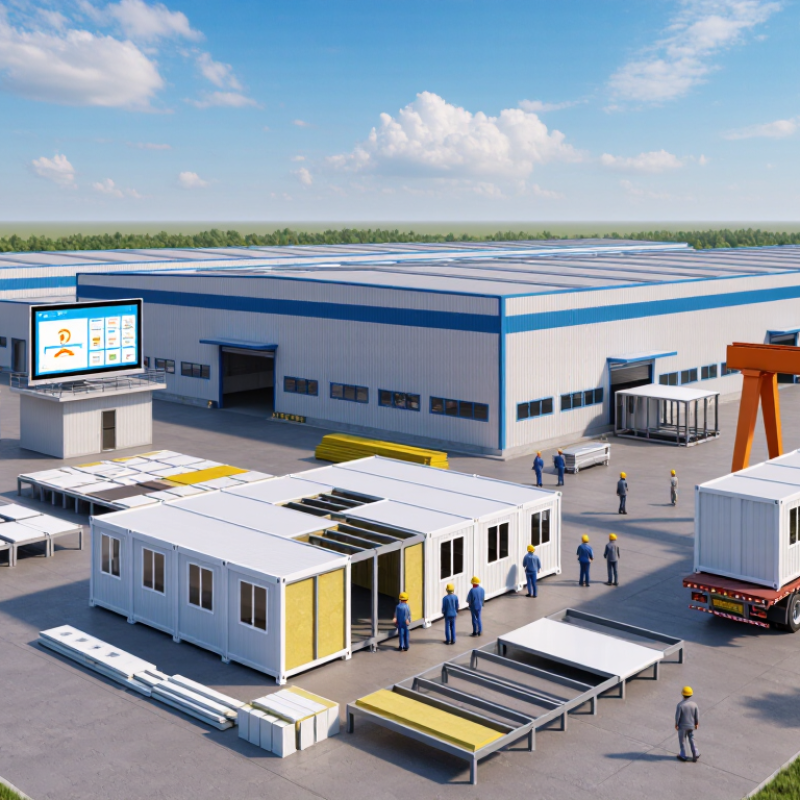
China’s Prefab-Building Policy: The 2025 Target of 30% of New Buildings
China’s 2025 prefab-building target set an ambitious direction: prefabricated construction was expected to make up 30% of new buildings. The target matters to manufacturers and buyers alike. It encourages more factory-made components, but it does not mean every project uses fully modular homes. Definitions and local adoption can vary.
The practical gains are visible on site. Wall panels arrive ready for assembly, and bathroom modules can reduce repeated wet trades. Less cutting may mean cleaner work areas. Still, a factory-built unit is only as reliable as its joints, transport plan, and installation checks. A small mismatch between module dimensions and the foundation can delay an entire lift. Details matter.
For buyers comparing manufacturers, ask for project records, material specifications, and clear inspection procedures. Check how the supplier manages moisture protection, fire performance, insulation, and connections between modules. A factory tour helps, but sample panels and completed projects tell a fuller story. The target sounds neat on paper; delivery is messier. Regional logistics, skilled crews, and site conditions can all affect results. Prefabrication is not automatically faster or cheaper. It works best when design, production, transport, and assembly are coordinated early. Even then, some assumptions need revisiting once the modules reach the site.
Prefab Home Systems: 2D Panels, 3D Modules, and Hybrid Construction
Prefab home systems range from 2D panels to volumetric 3D modules, with hybrid construction between them. In 2D systems, factories produce wall, floor, or roof panels, then crews assemble them on site. This approach suits varied layouts, but depends on accurate foundations, weather protection, and skilled installation. A small alignment error can travel through the frame.
With 3D modules, rooms arrive largely assembled, sometimes with wiring, plumbing, and finishes in place. McKinsey’s 2019 report, Modular Construction: From Projects to Products, estimates modular methods can shorten schedules by 20–50% in suitable projects. That is a potential, not a guarantee. Transport limits, crane access, and repeated designs can change the calculation. Hybrid systems combine factory-built modules with on-site structure or panel work, offering flexibility where room sizes or site conditions vary.
For Chinese manufacturers, buyers should ask for panel tolerances, connection details, fire and acoustic test records, and a clear division of installation work. UNEP and GlobalABC reported that buildings and construction produced 37% of global energy- and process-related CO₂ emissions in 2022. Factory production alone does not make a home low-carbon; material choices, insulation, and operational energy still matter. Inspect sample joints and finishes, not only renderings. Some decisions remain easy to overlook. That gap deserves a real site review.
Manufacturer Assessment Using GB/T 51129-2017 and ISO 9001 Quality Systems
Best Modern Prefab Modular Homes Manufacturers in China?
A credible manufacturer assessment starts with evidence, not showroom images. Check how GB/T 51129-2017 applies to the proposed building system, and ask for documented design and inspection records. The standard is not a substitute for project-specific engineering review. Confirm that drawings, material specifications, and factory procedures match the actual modules being quoted.
Look closely at production controls. Can the factory trace a steel member or wall panel to its inspection record? Are dimensional checks recorded before modules leave the line? Small details matter. Door openings that are slightly out of square can complicate site assembly. ISO 9001 certification can indicate a managed quality system, but it does not prove that every home meets the project requirements. Verify the certificate’s validity, scope, and issuing body, then compare its procedures with real production evidence.
Visit the facility when possible. Observe welding checks, moisture protection, and how finished modules are stored. Ask how defects are logged and corrected, not just how often they occur. Some records may be incomplete or awkward to interpret. That deserves follow-up, not an automatic rejection. A careful assessment combines standards, factory observations, and clear answers about design changes, transport, and installation responsibility.
Best Modern Prefab Modular Homes Manufacturers in China?
Standards reference for a manufacturer assessment using GB/T 51129-2017 and ISO 9001:2015
How to read this chart: It shows the edition years of the standards referenced, not manufacturer ratings or certification status. Use GB/T 51129-2017 as the assembled-building evaluation reference and ISO 9001:2015 to review quality-management-system evidence.
Engineering Checks Against China’s GB 50011 Seismic and GB 50016 Fire Codes
When comparing modern prefab modular home manufacturers in China, treat code evidence as a design check, not a brochure claim. Verify the project against GB 50011 for seismic design and GB 50016 for fire protection, alongside applicable mandatory general codes GB 55002-2021 and GB 55037-2022. Confirm current amendments and local requirements with the project’s qualified Chinese design institute. Request site-specific calculations covering seismic intensity, soil conditions, module connections, diaphragm continuity, and anchorage. A tidy factory video proves little.
For fire safety, check rated wall and floor assemblies, protected escape routes, fire-stopping at service penetrations, and barriers inside concealed cavities. Ask for test reports that match the proposed materials, joint details, and installation method; a rating for a wall alone may not represent a complete modular junction. UNEP’s 2024 Global Status Report estimates buildings and construction used 34% of global energy and produced 37% of energy- and process-related CO2 emissions in 2022. Lower-impact construction matters, but it cannot replace documented life-safety performance.
Tips: Request coordinated structural and fire drawings, calculation summaries, and product test records before deposit. Check that the documents identify the exact module configuration and project location. Small gaps at connections can matter. I would still ask an independent local engineer to review any unclear detail.
Comparing Chinese Manufacturers by Capacity, Lead Time, Warranty, and Export Record
Comparing Chinese prefab modular-home manufacturers requires more than checking factory size. Ask for monthly output by module type, not a broad annual figure. Match that capacity to your design, since steel-frame units and finished bathroom pods use different production lines. Request dated production photos, inspection records, and a sample packing list. Paper matters. Photos can flatter, though. Verify the factory address and whether critical work is subcontracted.
Measure lead time from approved drawings to port-ready loading, with revisions and holidays stated separately. Get milestone dates for engineering, fabrication, trial assembly, and packing. A quoted six weeks means little if approvals take another month. Examine warranty periods, exclusions, replacement-part availability, and responsibility for freight. Ask for written examples of past claims.
For export experience, request destination-market references, redacted shipping records, and packaging specifications for long transit. Confirm the documents match the actual shipment. No checklist catches everything; moisture damage may only appear after unloading. Speak with a recent buyer, if possible, and ask how many modules arrived with repairable finish damage.